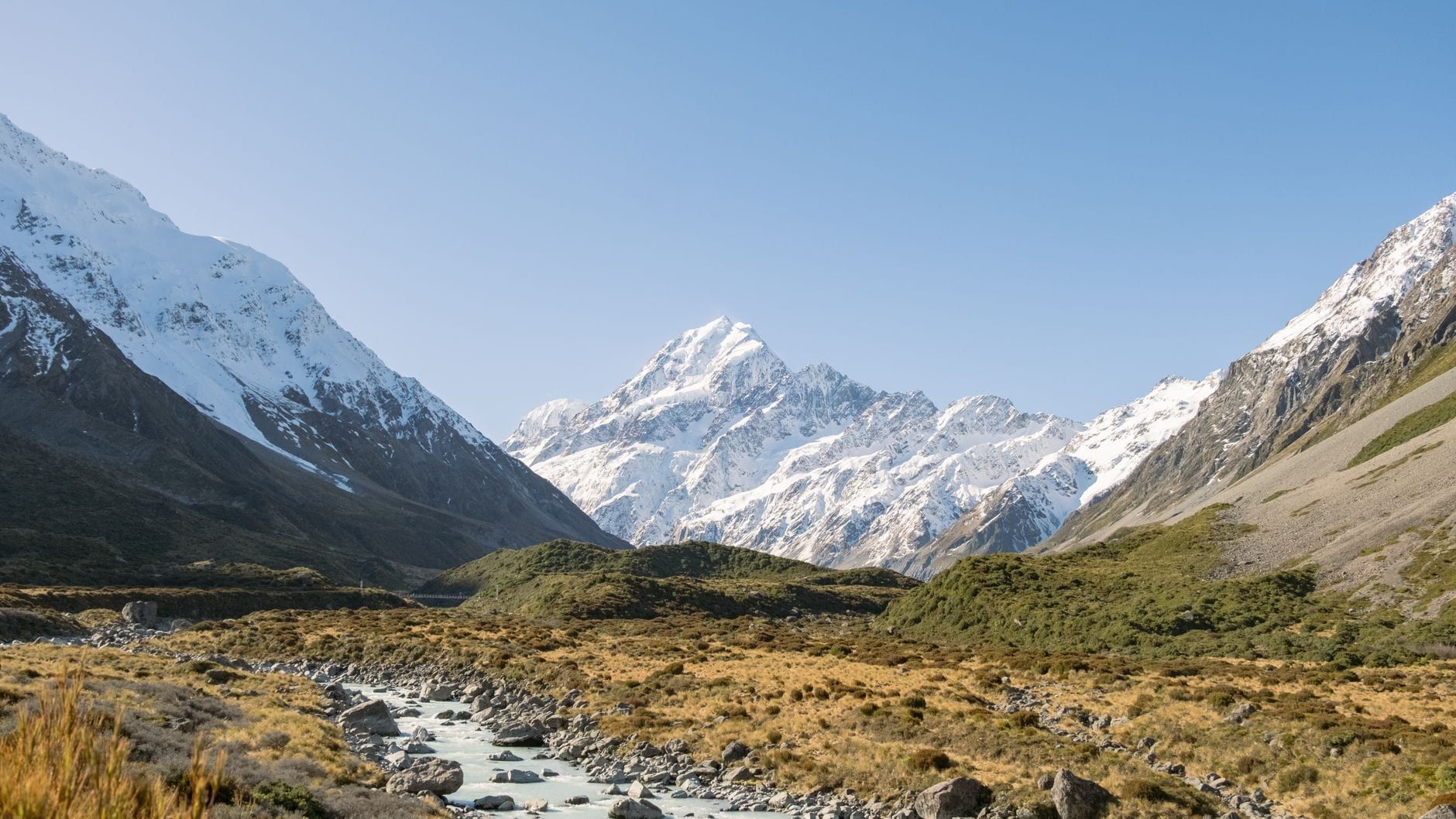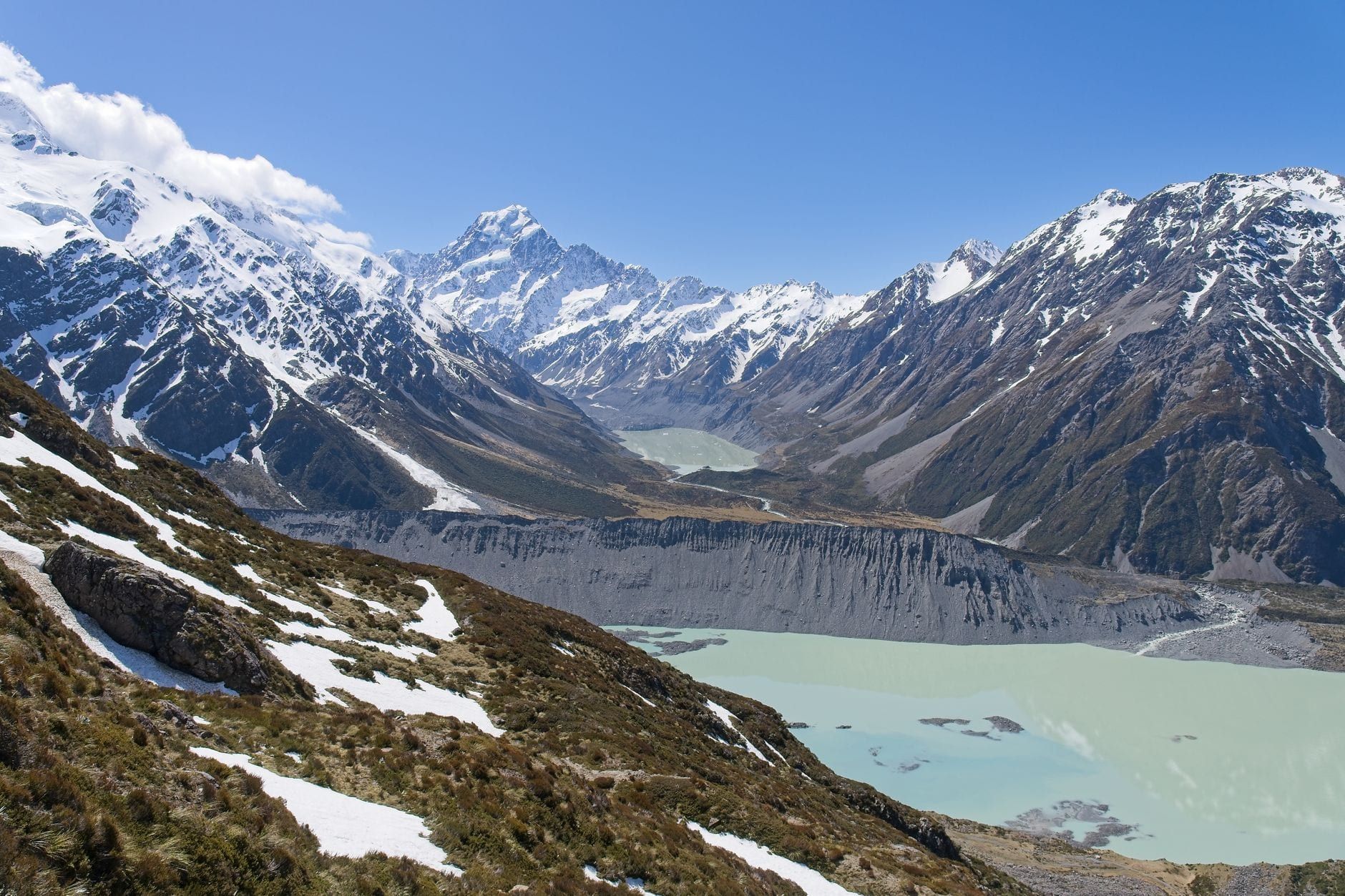
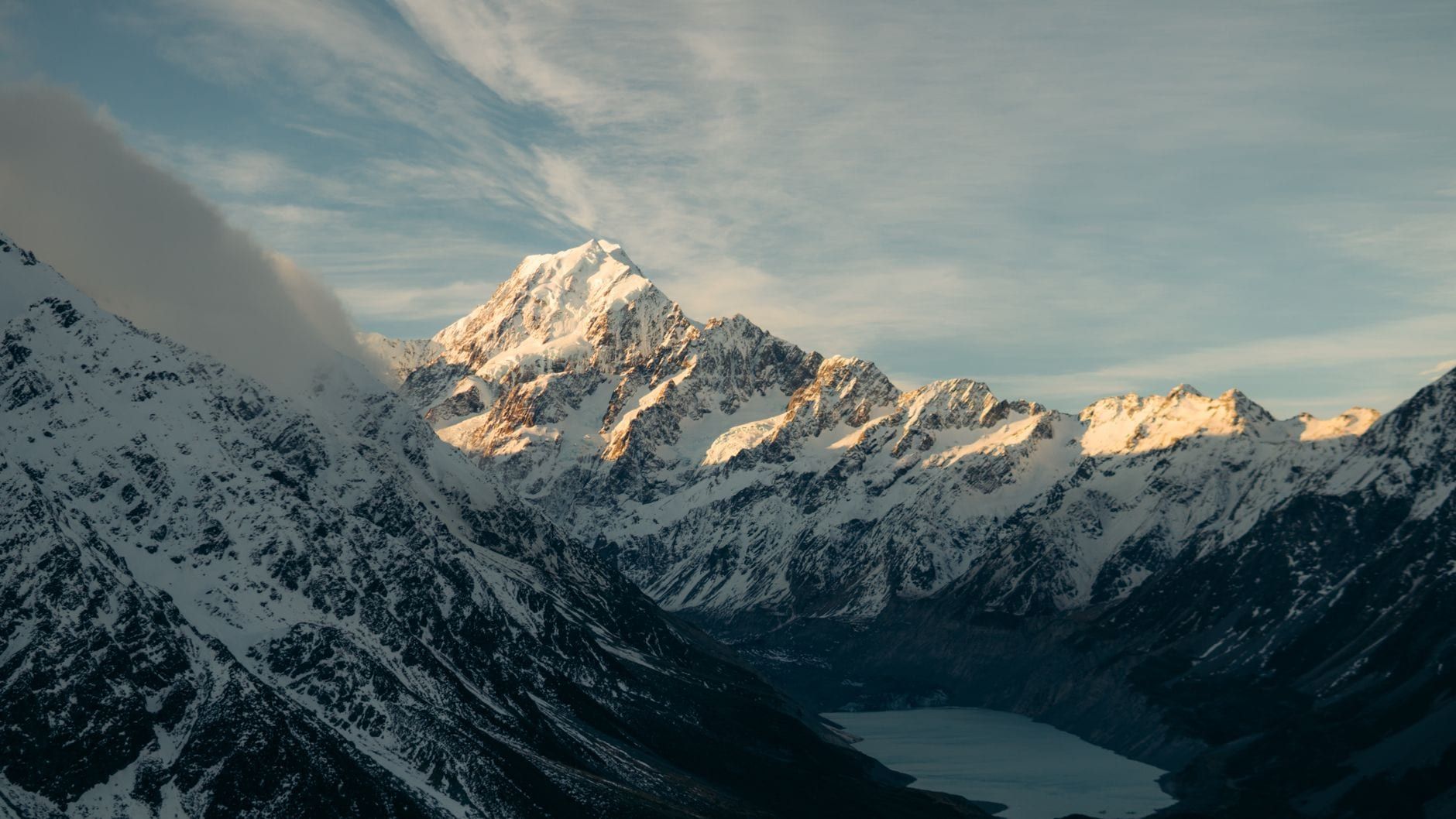
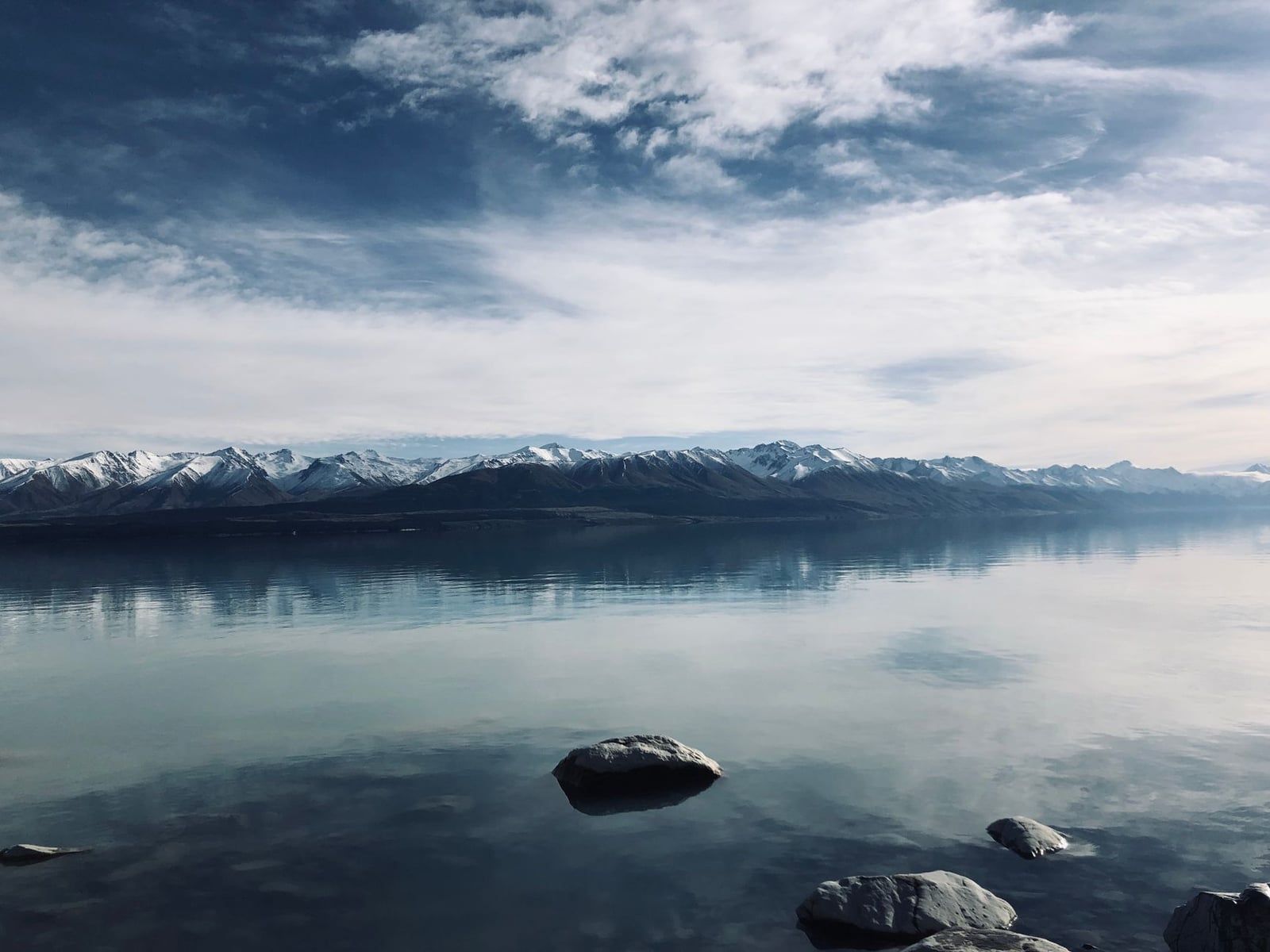
Winter at Aoraki/Mount Cook runs June through August, when snow settles over the Southern Alps and the drive along Lake Pukaki turns into a chain of white peaks reflected in turquoise water. Daylight shrinks to roughly 8am-5pm, several hikes ice over, and the crowds that pack the Hooker Valley Track in January mostly disappear. That's the trade: colder mornings and shorter days for empty trails and some of the clearest night skies on the South Island.
Winter proper (June-August) is different from what local guiding operators call the 'winter mountaineering period', which runs July to mid-October and applies to technical alpine routes rather than sightseeing. For a first winter visit, expect a place built around short walks, scenic flights and long clear nights rather than big all-day hikes. Photographers, stargazers and anyone who prefers an empty trail to a crowded one will get more out of a winter trip than someone hoping to knock off Mueller Hut in a day.
Winter at Mount Cook: What to Expect
Winter here means June to August, full stop, separate from the longer 'winter mountaineering period' that guiding companies use for technical routes — that one starts in July and stretches to mid-October, well past when day-trippers think of winter as over. For a hiker or photographer planning a trip, June-August is the window that matters.
Alpine Guides, who run climbing trips out of the village, put the coldest stretch — July and August — at between -15°C and 0°C, with daylight running roughly 8am to 5pm. Other operators report lows closer to -10°C. Either way, mornings start well below freezing and the sun drops fast behind the ridgeline.
More than 40% of the 707 km2 park sits under permanent ice and snow, and the Tasman Glacier — New Zealand's longest at about 23km — dominates the valley north of the village, which itself sits at 760m elevation ringed by 29 peaks over 3,000m. In winter that ice gets a fresh coat of snow and the whole valley turns white from the road up.
Crowds thin out fast after Easter, and weather is often more settled than the wetter, windier shoulder months of April-May and September-October. That doesn't mean it's warm, or dry, or easy. It just means fewer people share the view.
Winter suits photographers chasing snow on the peaks, stargazers, and anyone happy with a short walk rather than a summit attempt. Serious day hikers aiming for Mueller Hut or the high routes should wait for summer, when the avalanche-complex terrain isn't loaded with fresh snow.
Getting to Mount Cook in Winter
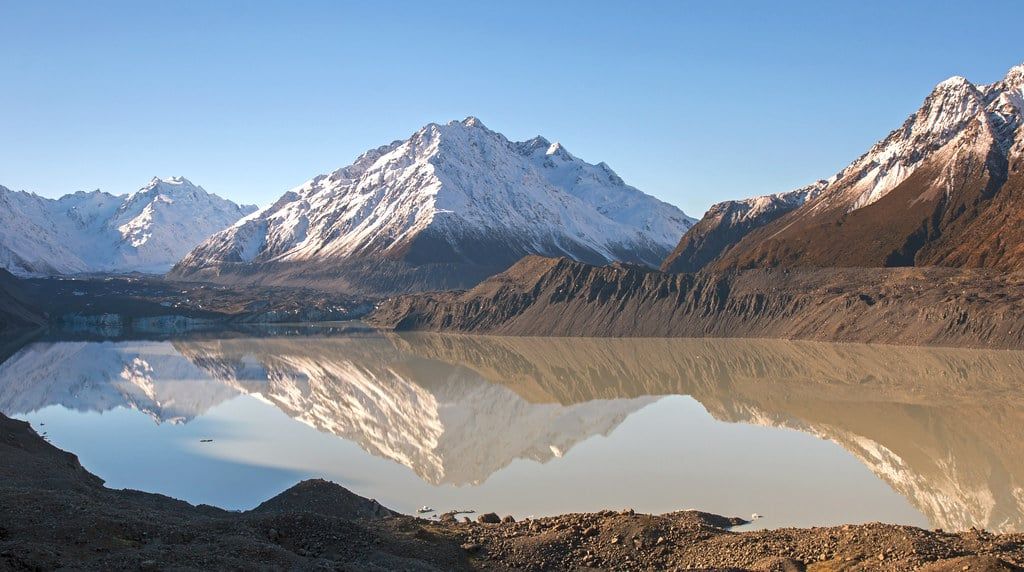
Mount Cook Village is about 3 to 3.5 hours from Queenstown (roughly 271km) via Cromwell and the Lindis Pass, and 3h45-4 hours from Christchurch (about 330km) via Fairlie and Lake Tekapo. Both routes join SH80 for the final stretch, which runs along Lake Pukaki — ice-blue water on one side, Aoraki/Mount Cook dead ahead on a clear day.
Mount Cook is one of the South Island areas most likely to see snow and ice on the roads in winter, alongside Queenstown and Wānaka. Carry snow chains, check state highway conditions before you leave, and build in extra time if fresh snow has fallen overnight on SH80 or the Lindis Pass. Full route options are on our directions page.
Twizel, about 65km and 45-60 minutes south, is the last stop for a real supermarket and cheap fuel. Mount Cook Village has one petrol station and no grocery store, so stock up before the final stretch.
Coach services from Christchurch, Queenstown and Tekapo have run in past seasons, though timetables shift year to year and some routes get suspended — confirm directly with the operator before counting on a bus in winter. If the drive itself worries you, a guided day trip from Queenstown to Mount Cook hands the transport over to someone who does it daily.
Hiking in Winter: Which Tracks Stay Open
Four of the park's day walks stay genuinely walkable through winter. Two become serious alpine terrain. Here's what each one looks like once there's snow on the ground.
Hooker Valley Track
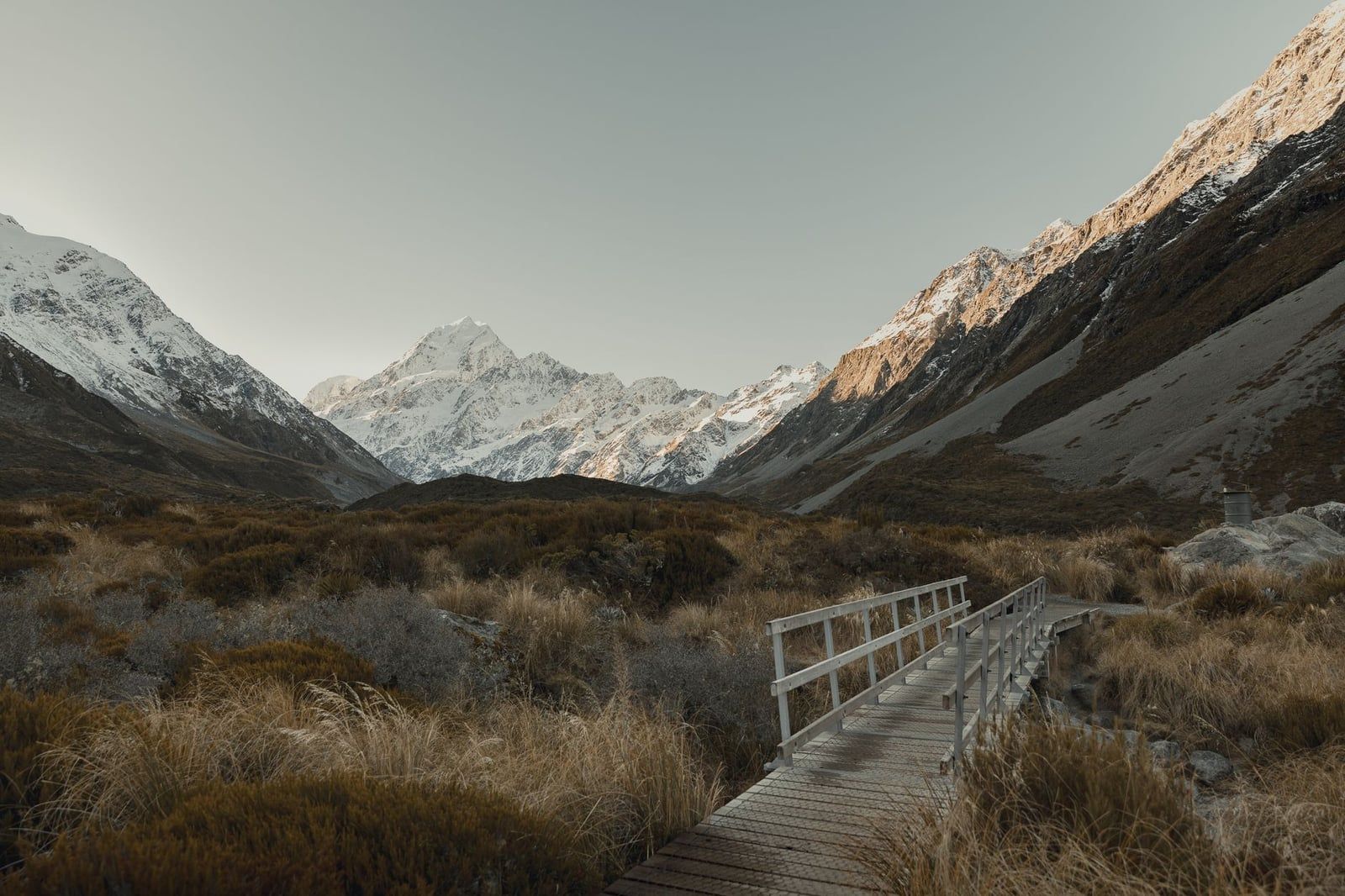
The park's signature walk stays open year-round: 10km return, about 3 hours, crossing three swing bridges over the glacial Hooker River to Hooker Lake at the foot of Aoraki/Mount Cook. In winter the gravel turns to ice in shaded sections, and DOC recommends microspikes and hiking poles for the whole route — the swing bridges get slick too. It's rated 'simple' avalanche terrain all the way to the lake, which makes it the safest full-length walk in the park once you've got grip on your boots.
Kea Point Track
Kea Point is the short option: about 1 to 1.5 hours return through subalpine scrub to a platform overlooking Mueller Glacier's terminal lake. Ice forms early on the boardwalk on cold mornings, but the walk is short enough to turn back if conditions look rough. Kea, the alpine parrot the track is named for, show up just as readily in winter as summer.
Red Tarns Track and Tasman Valley/Blue Lakes
Red Tarns is steeper but still 'simple'-rated, about 2 hours return, climbing through beech forest to a set of tarns with a close view of Mount Sefton. The Tasman Valley floor and the Blue Lakes track, a short walk from a car park roughly 15-20 minutes' drive from the village, are the gentlest winter options — a good fallback if the higher tracks are too icy for comfort.
Sealy Tarns Track
Sealy Tarns means 2,200 steps up to a lookout over the Mueller Glacier, and DOC rates it 'complex' avalanche terrain, not 'simple' like the valley-floor walks. Ice on the steps can get bad enough that crampons, not just microspikes, are the right call. Skip it after fresh snow unless you've got the gear and the experience to read the slope above you.
Mueller Hut Route
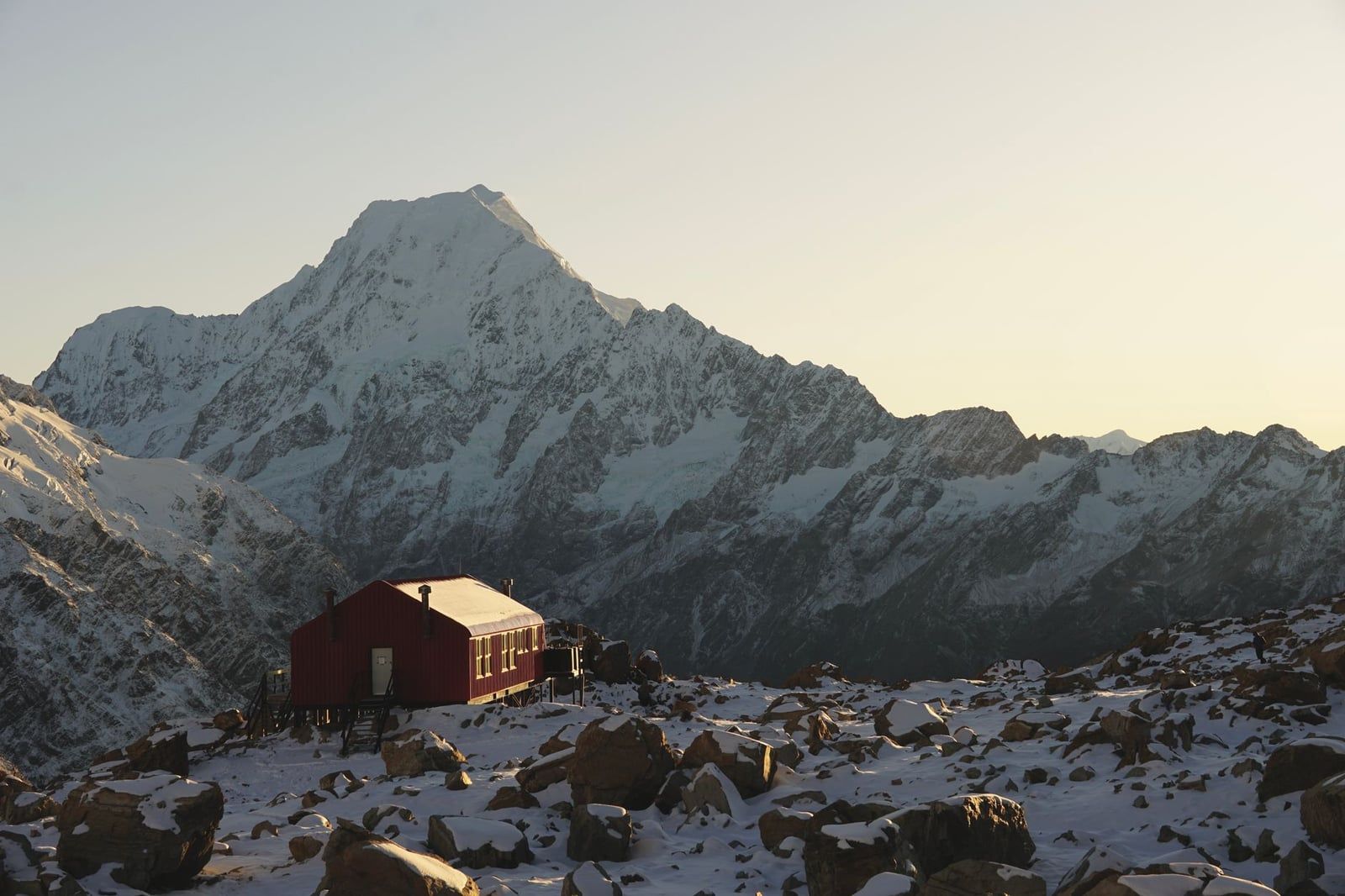
The route to Mueller Hut climbs through the same terrain as Sealy Tarns and keeps going into genuinely complex avalanche country, with no way to dodge exposure once the start zones have loaded with snow. DOC is blunt about it: inexperienced parties should only attempt it when the avalanche danger is rated low. Treat this as a mountaineering objective in winter, not a day hike. Our Mount Cook hikes guide covers every trail in more detail, including summer conditions.
| Track | Distance/Time | Avalanche Terrain (ATES) |
|---|---|---|
| Hooker Valley Track | 10km, about 3 hours return | Simple |
| Kea Point Track | 1-1.5 hours return | Simple |
| Red Tarns Track | About 2 hours return | Simple |
| Tasman Valley/Blue Lakes | Short walk from car park | Simple |
| Sealy Tarns Track | 2,200 steps, about 3 hours return | Complex |
| Mueller Hut Route | About 4 hours one way | Complex |
Avalanche Safety and Track Conditions
Avalanche risk climbs sharply once winter sets in, and it isn't limited to the high routes. DOC notes that avalanches can occur on some park tracks during winter and spring, and that the Ball Hut Road sees large avalanches cross it most years, which is why it stays closed to public vehicle access.
Before heading past valley-floor terrain, check the New Zealand Avalanche Advisory, which publishes a daily rating by elevation and aspect, and stop at the DOC Visitor Centre, open 8:30am-4:30pm through the winter off-peak months. Match your plans to the track's ATES class — Hooker Valley to the lake, Kea Point, Red Tarns and the Tasman Valley floor are all 'simple'; Sealy Tarns and Mueller Hut are 'complex', a different category of decision entirely. Current fees and opening hours are on our hours and fees page.
Anyone entering complex terrain needs a transceiver, shovel and probe, the skills to use them, and a plan built around that day's advisory rating, not yesterday's. If that list means nothing to you, that's your answer: stay on the simple-rated tracks and leave the complex terrain to a trip with a guide.
Best Winter-Only Experiences
Winter isn't just the season when hikes get harder. It's also when a handful of experiences are genuinely better than in summer.
Stargazing in the Dark Sky Reserve
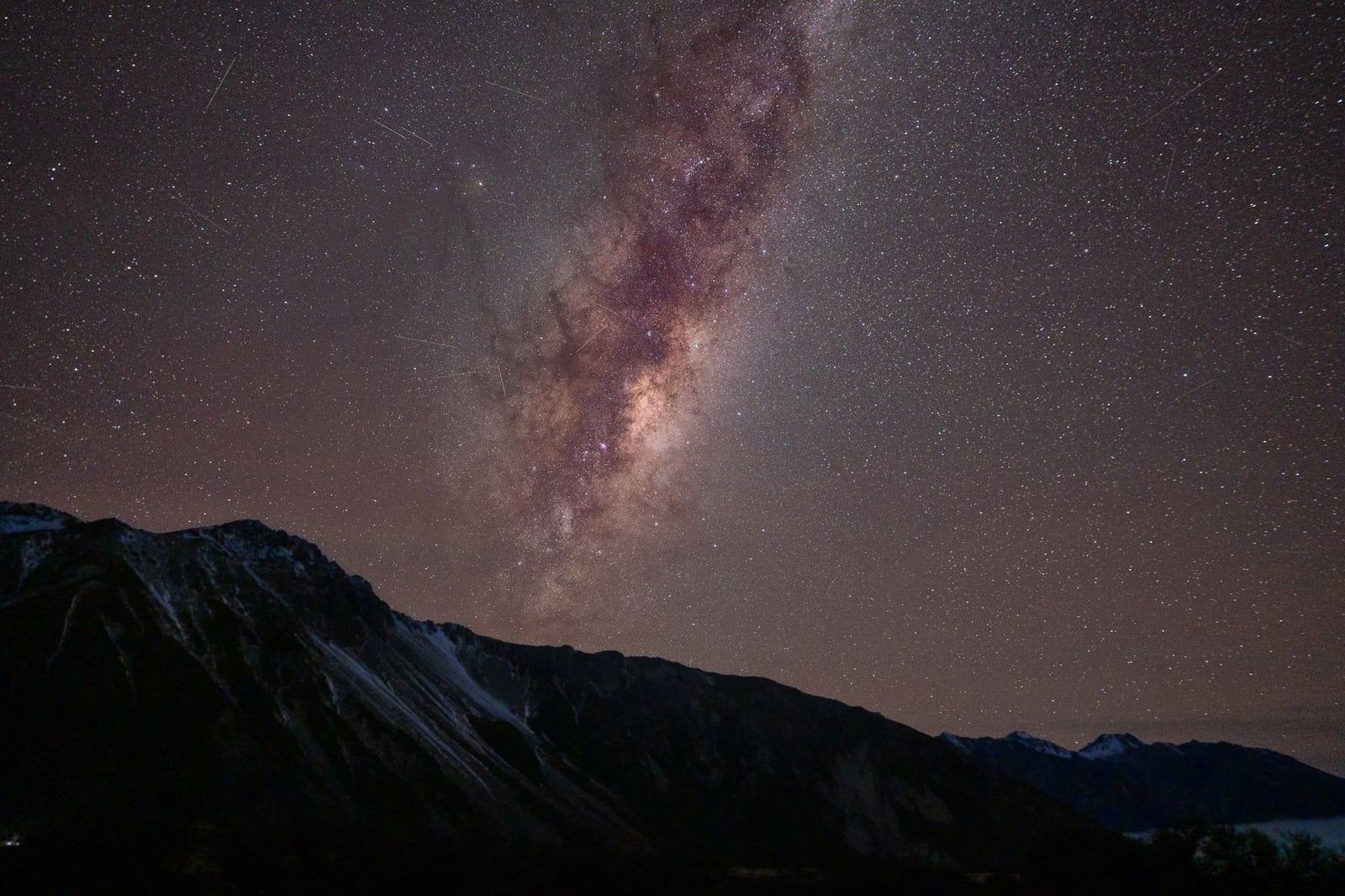
Aoraki/Mount Cook sits inside the Aoraki Mackenzie International Dark Sky Reserve, one of the largest dark sky reserves on Earth, and winter's longer nights mean more hours of proper darkness to work with. Big Sky Stargazing's guided tour runs 90 minutes for NZ$99 per adult, including transport and a warm jacket, and clear winter nights are some of the best conditions of the year for the Milky Way and the Magellanic Clouds. Book ahead through a stargazing tour rather than hoping for a walk-in spot — winter skies fill up fast when the forecast looks good.
Sir Edmund Hillary Alpine Centre
When cloud rolls in, the Alpine Centre's planetarium runs a 45-minute 'Galactic Journey' show daily (a family pass for two adults and two children costs NZ$75), and the attached museum and theatre cost NZ$20 for adults and NZ$10 for children. It's the obvious fallback on a socked-in winter afternoon when the tracks are icy and the sky's too cloudy for a night tour.
Heli-skiing and scenic flights
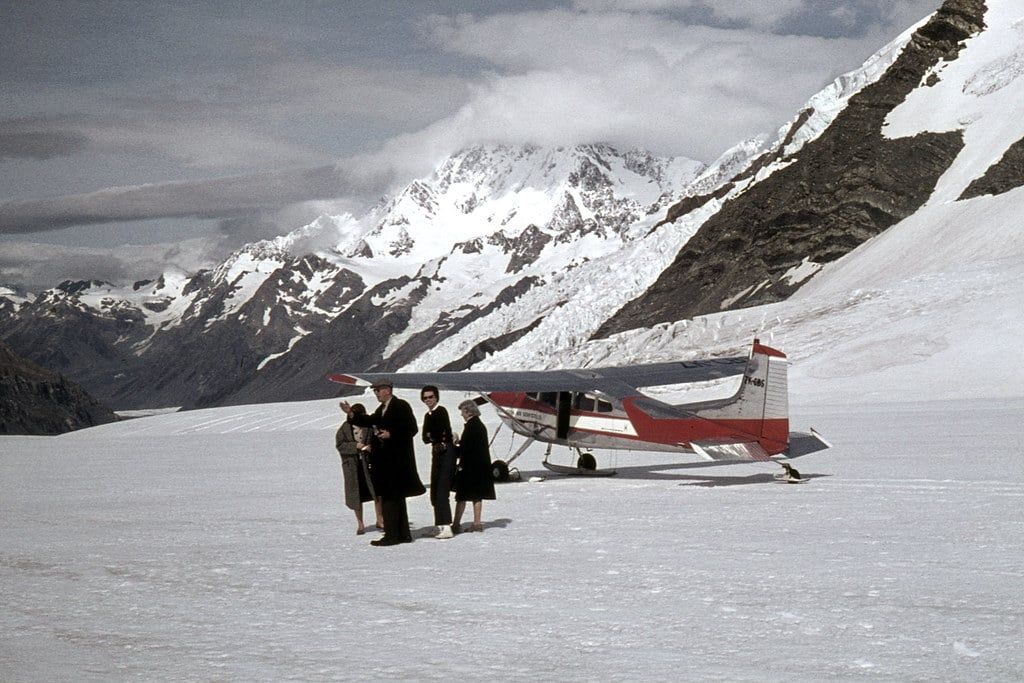
Winter is when Alpine Guides runs heliski trips and Ski the Tasman alongside their mountaineering flights, sharing aircraft to bring the per-person cost down. Ski-plane and helicopter operators land directly on the snowfields above the glaciers, putting passengers on real snow at altitude without a step of hiking involved — see helicopter tours or glacier tours for options that run through winter. It's the way to see Aoraki/Mount Cook up close when the ground routes are iced over.
Nearby ski fields
There's no ski field in Mount Cook Village itself. Roundhill, near Lake Tekapo, is about an hour from Glentanner, and Ohau Snow Fields' car park sits roughly the same distance away, with Ohau Village closer at around 50 minutes. Either makes an easy day-trip pairing with a Mount Cook stop if you're already skiing the Mackenzie Basin. Our things to do guide covers what else fills out a winter itinerary.
Where to Stay and Eat in Winter
Mount Cook Village has a small, fixed set of places to sleep: the Hermitage Hotel, Aoraki Court Motel, Aoraki Mount Cook Alpine Lodge, Haka House and the climbers' Unwin Lodge. Winter is the quiet season here, and rates typically ease off well below the summer peak — worth asking about directly when booking.
White Horse Hill, the DOC campground 2km from the village at the start of the Hooker Valley Track, charges NZ$20 per person per night. Expect a cold one in a tent; vans or a solid sleeping bag are the more realistic winter option. That's separate from the White Horse Hill car park fee (NZ$2.50 per half hour or NZ$25 per day), which applies to day parking rather than camping.
Glentanner Park Centre, about 20 minutes back toward Twizel, has cabins and camping with a log fire going, and it's the closer base if you're combining a visit with Roundhill or Ohau.
Eating options in the village stay limited year-round: the Sir Edmund Hillary café, the Snowline Bar and the Alpine Restaurant buffet at the Hermitage cover most of it. There's no supermarket, so anyone self-catering needs to have shopped in Twizel already.
What to Pack for a Winter Trip
Gear shops near the village are essentially nonexistent, so bring what you need rather than planning to buy it there.
- Thermal base layer, insulated mid-layer, waterproof outer shell
- Sturdy waterproof boots plus microspikes or crampons for icy tracks
- Map or GPS, headlamp, first aid kit, fully charged phone
- Sunscreen and sunglasses — UV at altitude stays strong even in snow
- A down jacket (500+ loft) or synthetic equivalent for standing around at lookouts
- For backcountry nights, a 4-season sleeping bag rated to about -12°C
One easy mistake: hydration bladders with hoses freeze solid within an hour or two in these temperatures. Carry a bottle instead, ideally insulated, and keep it inside your pack rather than an outer pocket.
Frequently asked questions
Is Mount Cook worth visiting in winter?
Yes, if you go in for scenery, quiet trails and stargazing rather than big summit days. The Dark Sky Reserve and the empty Hooker Valley Track make winter genuinely rewarding, but routes like Sealy Tarns and Mueller Hut turn into complex avalanche terrain, so it suits photographers and short-walk visitors more than serious hikers.
What tracks are open at Mount Cook in winter?
Hooker Valley Track, Kea Point Track, Red Tarns Track and the Tasman Valley/Blue Lakes track all stay open and are DOC-rated 'simple' avalanche terrain. Sealy Tarns and the Mueller Hut route are rated 'complex' and need real caution, avalanche gear and skills, or simply avoiding until conditions ease.
How cold does it get at Mount Cook in winter?
Alpine Guides puts the coldest stretch, July and August, between -15°C and 0°C, with daylight running roughly 8am to 5pm. Other operators report lows closer to -10°C — either way, pack for well below freezing.
Do I need snow chains to drive to Mount Cook in winter?
Carry them. Mount Cook is one of the South Island areas most likely to see snow and ice on its roads in winter, alongside Queenstown and Wānaka, and SH80 along Lake Pukaki can ice over fast. Check state highway conditions before you set out.
Can you go stargazing at Mount Cook in winter?
Yes, and it's one of the best seasons for it. Winter's long nights inside the Aoraki Mackenzie Dark Sky Reserve suit guided tours like Big Sky Stargazing's 90-minute trip (NZ$99 per adult), and the Alpine Centre planetarium is a solid backup on cloudy nights.
Is there skiing at Mount Cook itself?
No ski field sits in the village. Roundhill, near Tekapo, and Ohau Snow Fields are both roughly an hour from Glentanner, making either an easy pairing with a Mount Cook stop. Heli-skiing operates directly out of the Mount Cook/Glentanner area.
Is the Hooker Valley Track open in winter?
Yes, it's accessible year-round and rated simple avalanche terrain to Hooker Lake. DOC recommends microspikes and poles for the icy shaded sections and swing bridges, and the track occasionally closes for bridge repairs, so check DOC alerts before you drive up.
When is the best time to visit Mount Cook in winter?
June through August is winter proper, best for snow scenery and stargazing. Local guiding operators separately define a 'winter mountaineering period' from July to mid-October, which matters if you're planning a technical alpine route rather than a sightseeing trip.
Sources
- doc.govt.nz/parks-and-recreation/places-to-go/canterbury/places/aoraki-mount-coo
- doc.govt.nz/parks-and-recreation/places-to-go/canterbury/places/aoraki-mount-coo
- doc.govt.nz/parks-and-recreation/places-to-go/canterbury/places/aoraki-mount-coo
- en.wikipedia.org/wiki/Aoraki_/_Mount_Cook_National_Park
- en.wikipedia.org/wiki/Aoraki_/_Mount_Cook
- newzealand.com/sg/feature/national-parks-aoraki-mount-cook
- avalanche.net.nz/region/aorakimt-cook